How Masayume fits together
The app, the markets and the services behind each action.
Masayume brings several ways to use the same price markets into one app. A normal call, a copied trade and a duel pick all depend on a real market Window. Each feature adds its own rules around that market.
Explore each part and its connections. Expand to use more of your screen.
Follow an arrow to explore a connected part.
Choose a call or a feature
What this part does
The browser shows quotes, records your choices and asks for the signatures the selected route needs. Reading a market does not require spending permission.
Outgoing connections
- From You + your walletreadsRead or display
- From You + your walletapprovesAction or record
- From You + your walletfeature requestAction or record
- From You + your walletgame socketRead or display
The browser shows quotes, records your choices and asks for the signatures the selected route needs. Reading a market does not require spending permission.
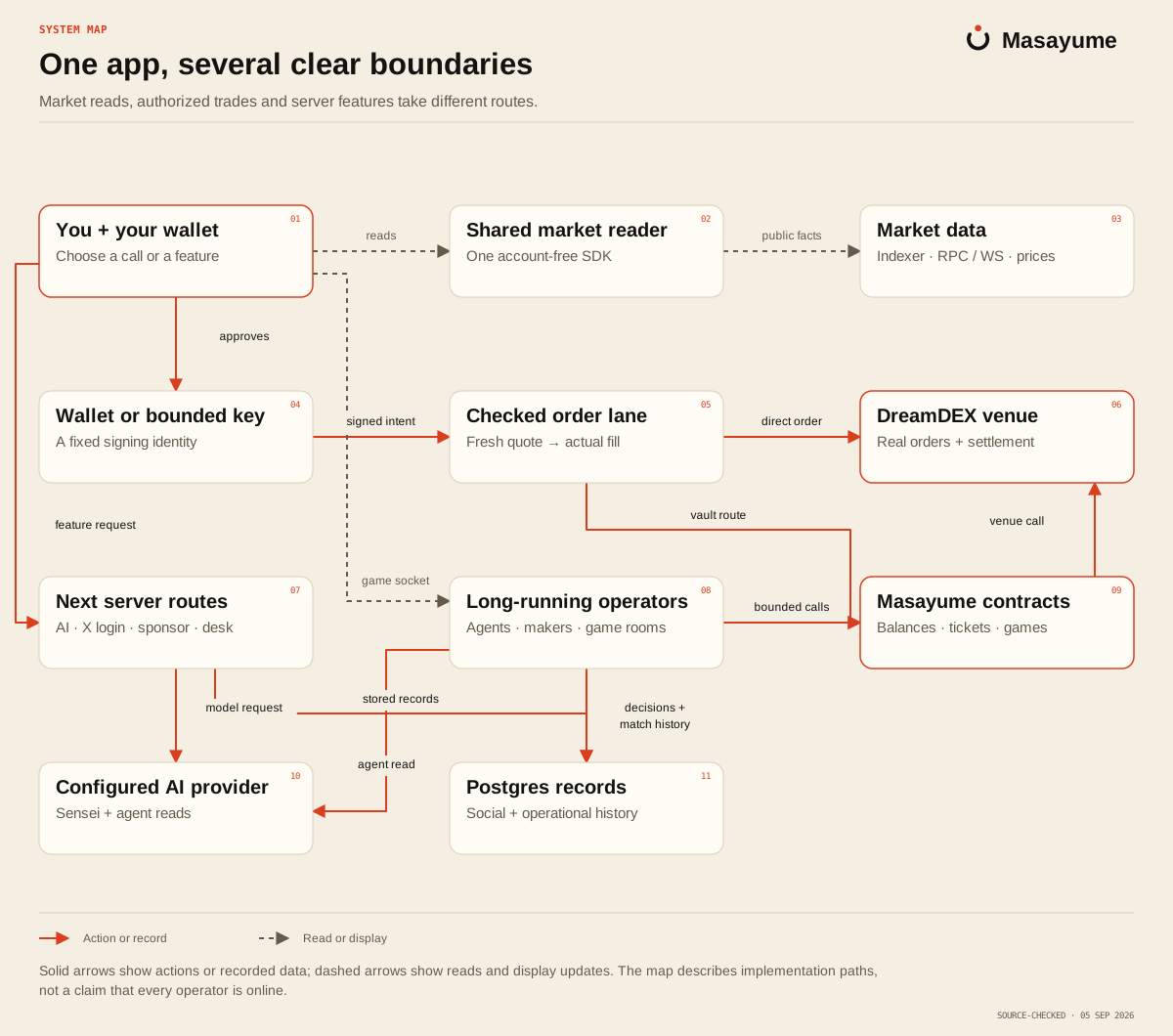
Read the map as text
- You + your wallet Shared market reader: reads.
- Shared market reader Market data: public facts.
- You + your wallet Wallet or bounded key: approves.
- Wallet or bounded key Checked order lane: signed intent.
- Checked order lane DreamDEX venue: direct order.
- Checked order lane Masayume contracts: vault route.
- Masayume contracts DreamDEX venue: venue call.
- You + your wallet Next server routes: feature request.
- You + your wallet Long-running operators: game socket.
- Next server routes Configured AI provider: model request.
- Next server routes Postgres records: stored records.
- Long-running operators Masayume contracts: bounded calls.
- Long-running operators Postgres records: decisions + match history.
- Long-running operators Configured AI provider: agent read.
The four parts
| Part | What it does for you |
|---|---|
| The app | Shows prices, explains tickets, connects your wallet and displays your receipts. |
| DreamDEX on Somnia | Supplies the market contracts, live orders, fills and settlement. |
| Masayume contracts | Hold trading balances, enforce spending permissions and manage specialist tickets, reserve shares and duels. |
| Masayume services | Find opponents, run strategies, read X mentions, provide AI answers and keep useful history. |
The checked-in app configuration points to Somnia Shannon testnet, chain 50312. Test collateral and STT for transaction fees have different jobs. A displayed test balance is not a claim about real-money value.
Reading is separate from signing
The market reader has no account or signing key. It reads the indexer, price feed and chain. Every signer gets a separate session, bound to one account and one role.
Your wallet signs ordinary transactions. A browser key can sign under permission you granted. A strategy runner or X executor acts under its own bounded grant. Sharing a market data connection does not make those signers share a wallet.
What decides the result?
The browser does not declare a winning trade. Market contracts and oracle answers determine settlement; receipts record actual fills. Masayume's contracts apply the rules for their ticket type.
Server responsibilities vary. Private mode relies on a desk to connect a claim back to its owner. Season prizes use an admin-controlled payout. Arcade scores are checked by replay on a server. These distinctions are explained on the relevant pages.
Choose a deeper view
- DreamDEX SDK: features, exact calls and source code
- Ordinary calls, balances and Parlays
- Range pricing and settlement
- Boost and knock-outs
- Earn and market making
- Private mode and its trust boundary
- AI agents and spending controls
- Games and their different proofs
- X identity and execution
For the current deployment, use Status. A contract address in the source is a deployment record; it does not establish that every connected service is running today.
Source notes
This guide follows the application code reviewed on 2026-09-07. Links point to that reviewed commit and require repository access. GitHub may show 404 if you are signed out or do not have access.