Boost and knock-outs
How extra buying power is funded, and why a position can close early.
Boost uses your stake plus capital from LeverageReserve to buy more contracts on a Window. The reserve charges a premium and is repaid first when the position exits.
Explore each part and its connections. Expand to use more of your screen.
Follow an arrow to explore a connected part.
Side · amount · multiplier
What this part does
The user supplies stake and a minimum quantity. The contract reprices from current book liquidity before taking the order.
Outgoing connections
- From Your stake + Boostopen requestAction or record
The user supplies stake and a minimum quantity. The contract reprices from current book liquidity before taking the order.
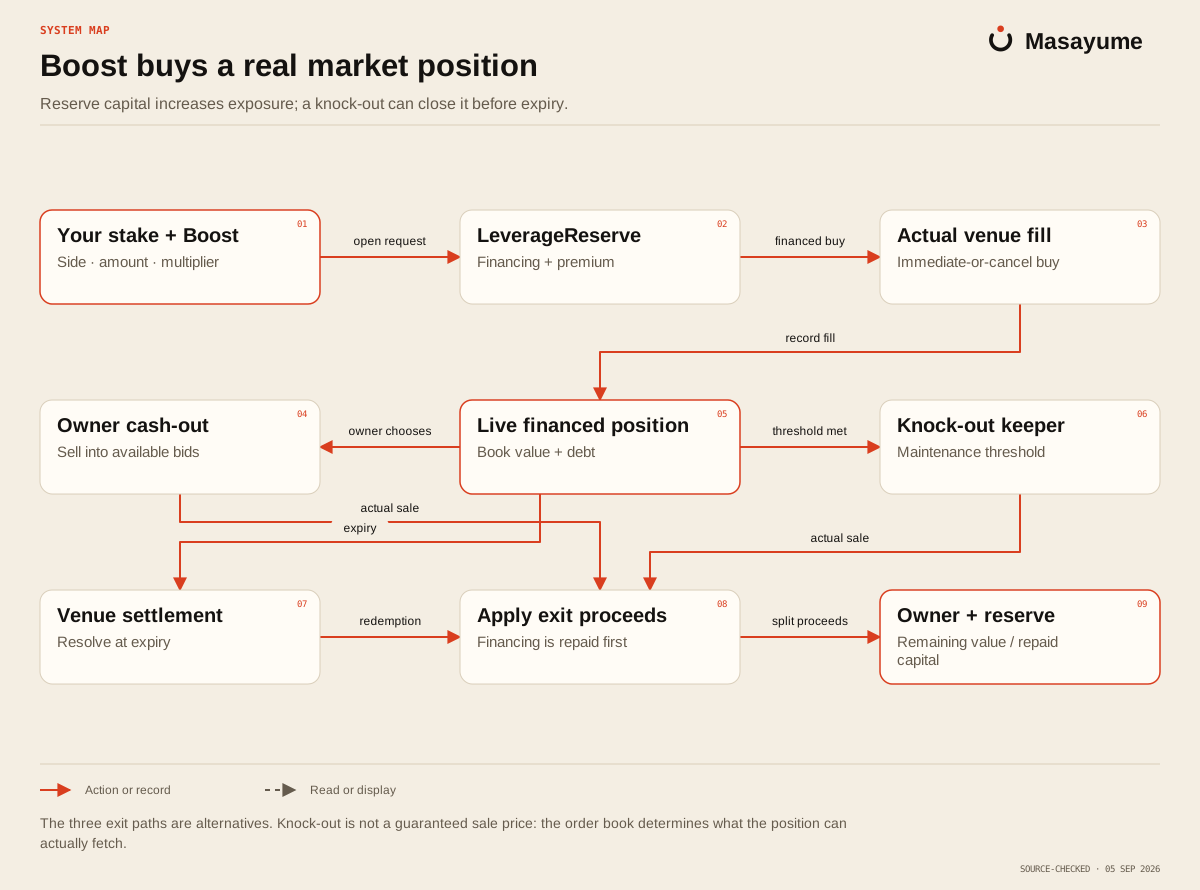
Read the map as text
- Your stake + Boost LeverageReserve: open request.
- LeverageReserve Actual venue fill: financed buy.
- Actual venue fill Live financed position: record fill.
- Live financed position Owner cash-out: owner chooses.
- Live financed position Knock-out keeper: threshold met.
- Live financed position Venue settlement: expiry.
- Owner cash-out Apply exit proceeds: actual sale.
- Knock-out keeper Apply exit proceeds: actual sale.
- Venue settlement Apply exit proceeds: redemption.
- Apply exit proceeds Owner + reserve: split proceeds.
Opening a boosted call
The contract reads the current book, sizes what the stake and financed capital can buy, and sends an immediate-or-cancel order. It records the actual fill. Unused stake is returned, and your minimum-quantity guard limits how much a moved book can change the purchase.
There are public caps on leverage, financing per position and Window, total exposure and open positions. An empty reserve or insufficient market depth can prevent opening.
Three ways a position exits
| Exit | Who can start it | What happens |
|---|---|---|
| Cash out | Position owner | Sell into current bids, repay the reserve, return the rest to the owner. |
| Knock out | Anyone, when the maintenance condition is met | Sell the position after its book value reaches the maintenance line. |
| Settle | Anyone, after market resolution or void | Redeem the venue contracts, repay the reserve, return any remainder to the owner. |
The maintenance line relates to the financed amount. It is checked against what the book would pay, not just the asset's displayed spot price.
Why the final result may differ from your expectation
A boosted position can knock out before the Window closes, even if the asset later recovers. Thin bids may prevent an immediate sale. A partial sale leaves a smaller position open with the remaining financing claim.
The owner's loss is bounded by the stake charged to that position. This does not make the stake safe: it can all be lost. The reserve absorbs financed capital it cannot recover on a completed exit.
What the keeper does
The leverage keeper watches open positions. It checks the market's settled status and current maintenance mark, then calls the contract functions already available to everyone. It provides prompt action; it does not decide a price or choose a payout recipient.
If the keeper is unavailable, those contract actions remain possible, but automatic timing is no longer assured. A healthy app page alone does not prove the keeper is running.
Source notes
This guide follows the application code reviewed on 2026-09-07. Links point to that reviewed commit and require repository access. GitHub may show 404 if you are signed out or do not have access.